
Over the past few years, I’ve released music in the ways most independent musicians do. My songs are on streaming platforms. I’ve released albums on CD. People have listened. Some have bought physical copies.
By most measures, it’s gone reasonably well.
There have been a good number of streams — not enough to generate meaningful income, but enough to know the music is being heard. I’ve sold CDs, which in itself felt like an achievement. The work has been out there, available, real.
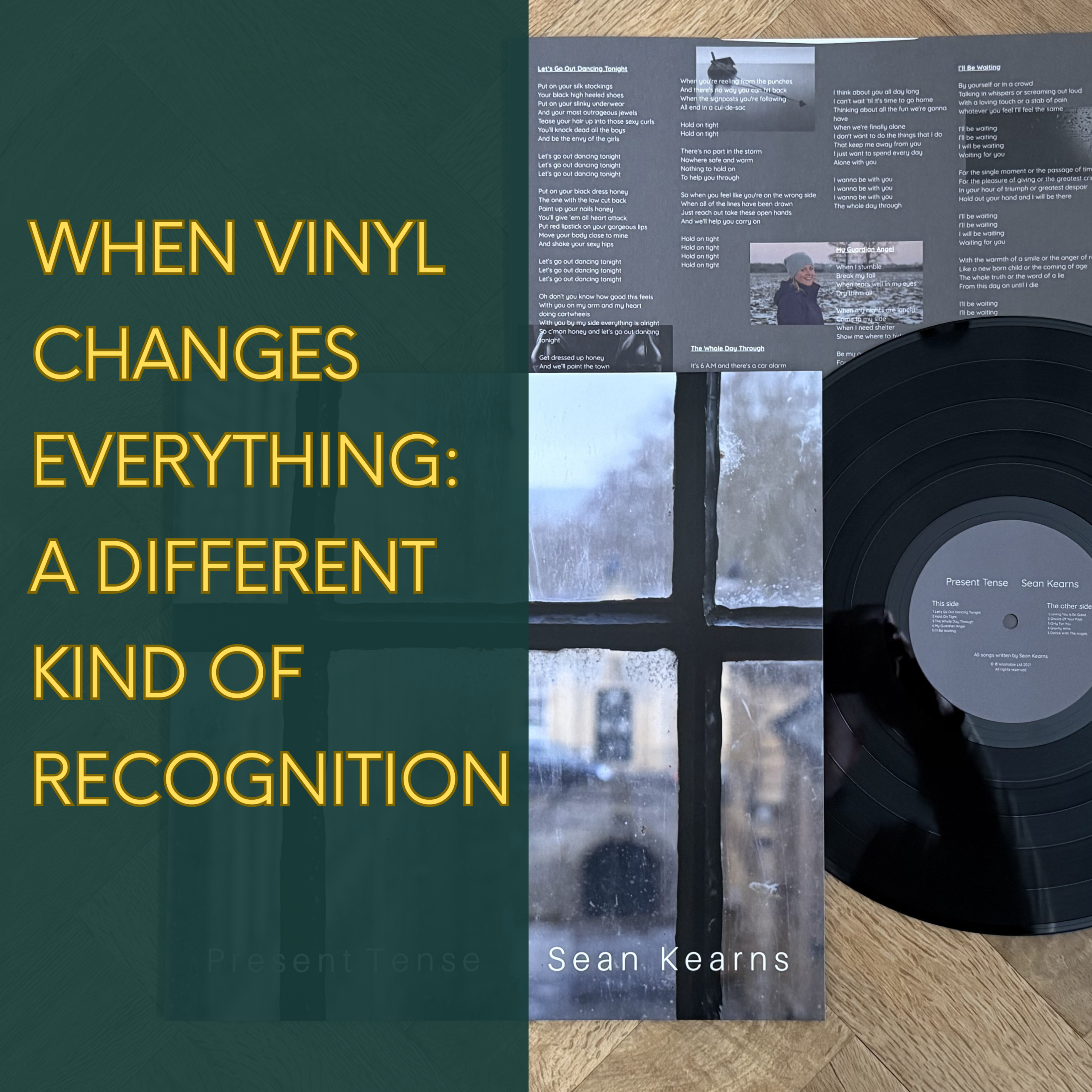
And yet, something changed when I released Present Tense on vinyl. Not in terms of numbers. In terms of perception.
The Same Music, A Different Reaction
Present Tense was originally released in 2021. The songs haven’t changed. The recordings are the same. The work behind it is exactly as it was then.
But the reaction to the vinyl release has been completely different.
People have responded in a way I haven’t experienced before. There’s been more interest, more engagement, more recognition. And not just in a general sense — in a specific one. It’s felt like I’ve suddenly become a musician in people’s eyes. A proper musician.
Not someone who makes music alongside everything else. Not someone doing it part-time. But someone whose work carries a different kind of weight.
Why Does Vinyl Do That?
I’ve been trying to understand why. Because logically, it doesn’t quite make sense. The music is the same. The effort behind it is the same. The time spent writing, recording and producing it hasn’t changed. In fact it was all done years ago.
But the format has.
And that seems to matter more than I expected. There’s something about vinyl that signals seriousness. Commitment. Completion.
It’s a format people associate with albums — not just collections of songs, but bodies of work. Something finished. Something intentional. Maybe it’s the physicality of it. Maybe it’s the history attached to it. Maybe it’s the perception that you don’t release something on vinyl unless it’s worth it.
Whatever it is, it changes how the music is received.
From “Making Music” to “Being a Musician”
Before the vinyl release, I was making music. After it, I’m being seen differently. That shift is subtle, but it’s real. It’s not something I’ve tried to manufacture. It’s not the result of a marketing push or a change in output. It’s simply the reaction people have had to the format itself.
And it’s made me realise how much perception plays a role in how music is valued.
Streaming is accessible, but also invisible. CDs are tangible, but less culturally prominent than they once were. Vinyl carries a different weight entirely. It feels established. Recognised. Legitimate.
It’s Not About Sales
Realistically, this probably won’t translate into huge vinyl sales. That’s not really the point. The number of copies sold isn’t what’s been most striking — it’s the response. The conversations. The messages. The way people talk about the release.
There’s a level of attention and respect that feels new, even though the work itself isn’t. And that’s been genuinely surprising.
Making It Possible
The vinyl release has been made possible through ElasticStage.
What’s interesting about this approach is that each record is produced individually, rather than pressed in large batches. That makes it accessible in a way that traditional vinyl production often isn’t, especially for independent artists.
It removes a lot of the barriers that would normally make something like this difficult to achieve. And in my case, it’s turned something that felt like a distant ambition into a reality.
👉 You can find the vinyl release here:
https://elasticstage.com/seankearns/releases/present-tense-album
What It Means to Me
There’s a personal side to this as well. Vinyl has always meant something. It was the format I associated with “real” albums growing up. The idea of one day having my own record — something physical, something lasting — has been there for a long time.
So to now have Present Tense exist in that form is significant. Not because it changes the music. But because it changes how that music is seen — by others, and if I’m honest, a little bit by me as well.
The Power of Format
This experience has made me think differently about formats in general. We often focus on the music itself — and rightly so. That’s the core of everything. But the way that music is presented still matters. It shapes perception. It influences how people engage with it. It affects how seriously it’s taken.
And sometimes, as I’ve found with this release, it can shift things in ways you don’t expect.
In the End
I’m not under any illusion that releasing a vinyl album suddenly changes everything. It doesn’t. But it has changed something. The reaction has been different. The perception has shifted. The work feels like it’s being seen in a new light.
And that’s been one of the most rewarding parts of the whole process. Not because it validates the music in a way that streaming didn’t. But because it’s a reminder that how something is presented can shape how it’s understood.
Even when the music itself hasn’t changed at all.